
Division 8: Health Psychology
Welcome to Division 8!
Health psychology focuses on psychological processes that are related to the promotion, maintenance and rehabilitation of health, and the avoidance of and coping with illness (e.g., Matarazzo, 1980). Prominent fields of health psychological research are for example explaining, predicting and changing health-relevant behavior and the coping with stress and illness.
In line with IAAP’s article 1 of its constitution "...to promote the science and practice of applied psychology and to facilitate interaction and communication about applied psychology around the world", Division 8 Health Psychology aims at connecting health psychologists around the world.
Division 8 Board Members
President: John de Wit, Netherlands
President-Elect: Aleksandra Kroemeke, Poland
Secretary: Aleksandra Kroemeke
Community Liaison: Chun-Qing Zhang
Division newsletter: Diana Taut
Our division was founded in 1986, the first divisional president was Richard Evans. Division 8 is currently the second largest division of IAAP, our members come from all parts of the world.
On this divisional webpage you will find information on the Executive Committee of the Division, on our activities reported in the divisional annual reports and newsletter inputs and on upcoming conferences.
Division 8 Health Psychology Leadership Transition at ICAP 2026 in Florence
From 21 to 25 July 2026, four board members of IAAP Division 8: Health Psychology met in person during the 31st International Congress of Applied Psychology (ICAP 2026), held in Florence, Italy. The congress provided a valuable opportunity for the officers to reconnect and to mark an important leadership transition within the Division.
During the ICAP 2026, Professor Sonia Lippke concluded her service with the Division upon completing her term as Past President. Professor Yiqun Gan completed her term as President and transitioned to the role of Past President, while Professor John de Wit, formerly President-Elect, assumed the role of President. Division 8 warmly thanks Professor Lippke for her dedicated leadership and significant contributions to the Division’s development. It also welcomes Professor Aleksandra Kroemeke she begins her term as President-Elect.
The meeting brought together Yiqun Gan, John de Wit, Sonia Lippke, and Aleksandra Kroemeke, representing both the outgoing and incoming leadership of the Division. It was a pity that Chun-Qing Zhang and Diana Taut were unable to attend the congress in person but continue to contribute actively to the work of the officer team of Division 8.
ICAP 2026 offered an inspiring international setting in which to celebrate the Division’s collegial spirit, strengthen professional connections, and look ahead to its next chapter. Division 8 looks forward to continued collaboration, greater engagement with its members, and further initiatives to advance health psychology across countries and regions all over the world.
Support for displaced children from Ukraine
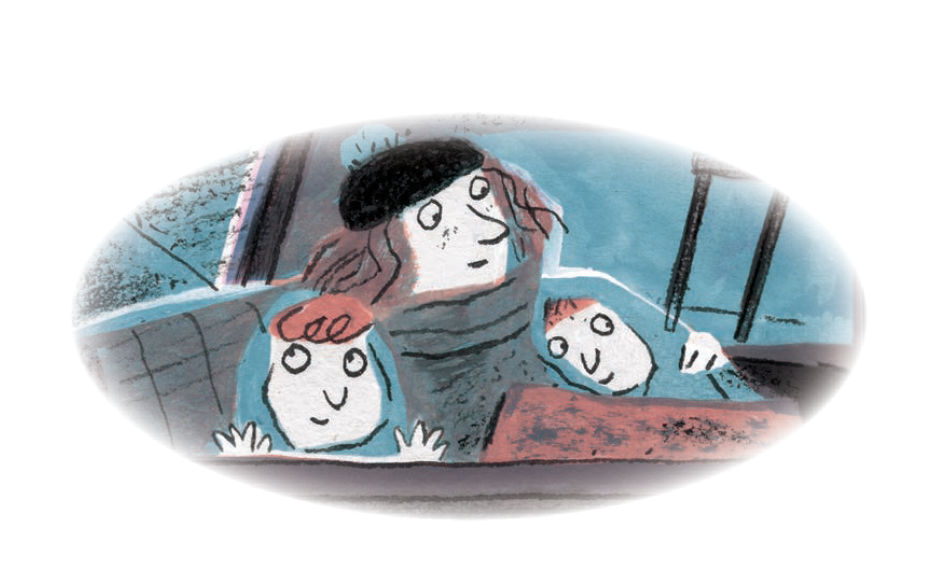
The story of ‘Olga, Boris and their new friends’ is a therapeutic tale created by more than 20 volunteers to help children refugees cope with their new reality. It is a story of two children and their mother fleeing the war in Ukraine. The book is available online free of charge as an e-book in Ukrainian, Russian, Polish, and English, as well as in an animated form with English subtitles. The originators of this initiative are professor Justyna Ziolkowska from SWPS University of Social Sciences and Humanities in Wroclaw, Poland, and professor Dariusz Galasinski from the University of Wroclaw, Poland.
E-Book in Ukrainian, Russian, Polish, and English
Animated video versions of the book: Ukrainian and Russian
Resources
Below are links to our past newsletters to stay up to date on latest activities and work Division 8 is currently doing.
- October 2025
- December 2024
- November 2024
- June 2024
- April 2024
- February 2024
- June 2023
- April 2023
- April 2022
- December 2021
- October 2021
- July 2021
- April 2021
- December 2020
- October 2020
- September 2020
- May 2020
- April 2020
- February 2020
- September 2019
- July 2019
- May 2019
- April 2019
- February 2019
- January 2019
- Spring 2018
- Fall 2017
- Spring 2017
- Fall 2016
- Spring 2016
- Fall 2015
Division 8 Social Media
Blogs
Journals
Applied Psychology: Health and Well-Being
British Journal of Health Psychology
Health Pyschology and Behavioral Medicine
International Journal of Behavioral Medicine
International Journal of Clinical and Health Psychology
Journal of Behavioral Medicine
Journal of Occupational Health Psychology
Translational Behavioral Medicine
Societies
European Health Psychology Society
Interaction Anxiousness Scale (IAS)
The IAS is composed of items describing subjective responses of anxiety (feeling tense, nervous, anxious, or uncomfortable) when confronting a variety of situations involving contingent social interactions, that is, situations in which an individual’s responses are contingent upon the responses of other persons with whom he or she interacts (e. g., a job interview, a conversation with a person of the opposite sex, talking to a teacher or a boss, talking on the telephone).
You could find more information about this instrument in the following link: Datasheet for IAAP Division 6
Get the instrument here:
Scale for Mood Assessment (EVEA)
This scale is also known as Mood Evaluation Scale . This instrument is aimed at assessing current mood, especially in the context of the administration of a mood induction procedure (MIP), but it can be used whenever there is a need to measure transitory moods at any one time.
You could find more information about this instrument in the following link: EVEA - Datasheet for IAAP Division 6
If you want to use this instrument, get it here:
Resources
Educative and Therapeutic Psychological Treatment Program for Child to Parents Violence, 2014
Quick Links
Join IAAP!
Not yet a member of IAAP? Join our community and unlock exclusive benefits, stay on top of the latest research, and connect with professionals globally. Head to our member benefits page for more details!
Announcements
