
Division 10: Board Members
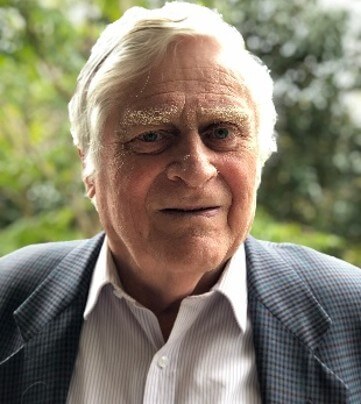 President: Anthony Cole (Australia)
Anthony Cole is a specialist in Forensic and Forensic Clinical Psychology and has many years of experience working in both Civil and Criminal Forensic areas of practice providing expert opinions and consultation ranging from Local Courts and Tribunals to Federal and Supreme Courts. He is a Fellow of the Australian Psychological Society (FAPS) and also a Fellow of both the Australian Psychological Society’s College of Forensic Psychologists (FCFP) and the College of Clinical Psychologists (FCCLP). Within the APS, he has been a member of the National Council (now the Board of Directors), Chairperson of the College of Forensic Psychologists for two full three-year terms, Secretary of the National Committee of the Division of Professional Affairs, a member of the National Committee of the Division of Scientific Affairs and of the APS Education and Training Committee. He has also been both a Forensic Associate Editor and a Forensic Special Topic Editor for the ‘Australian Psychologist’, the official applied practice and public policy journal of the Australian Psychological Society.
 Past-President: Igor Areh (Slovenia)
Igor Areh is an Associate Professor (Reader) in Forensic Psychology at the Faculty of Criminal Justice and Security, University of Maribor, Slovenia, EU. His lectures and research work focus, mainly on interviews of witnesses, crime victims, and suspects. In his successfully defended 2008 PhD thesis in psychology, he researched gender differences in eyewitness memory recall. In recent years, his research interests moved towards suspect interviews focused on two main themes: detecting deceit and the investigative interview. He also works as a criminal investigator advisor, mainly by evaluating the veracity of suspects' statements, as well as an expert witness in court. Igor teaches psychology in criminal justice, forensic psychology, and investigative psychology.
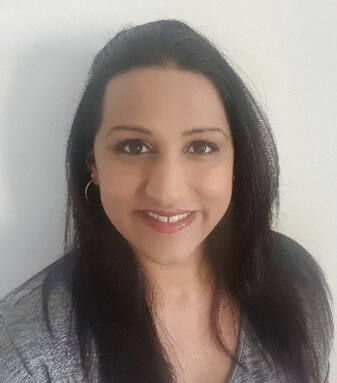 President-Elect: Kerry Fisher (United Kingdom)
Kerry Fisher is a PhD researcher in Psychology at the University of Birmingham, examining how men with lived experience of Borderline Personality Disorder are misdiagnosed with Antisocial Personality Disorder, and how this misdiagnosis shapes their pathways into and through the Criminal Justice System. She is President Elect of IAAP Division 10 and Vice President of IAAP Division 15 (Students & Early Career Psychologists), supporting global collaboration and student engagement. Within the British Psychological Society, Kerry previously served on the Student Committee as the EFPSA representative and on the West Midlands Regional Committee, advocating for postgraduate and early career psychologists. More recently, she has been appointed to the Male Psychology Section Committee with the BPS. Her work centres on forensic psychological practice, bringing together research and ethics to strengthen justice aligned practice.
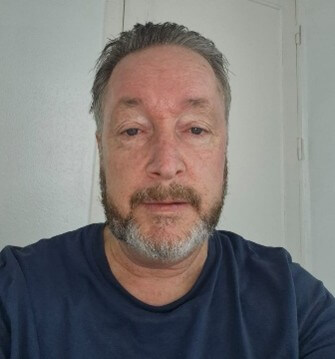 Colin Tredoux (South Africa)
Colin Tredoux is a research psychologist and Professor of Psychology at the University of Cape Town, South Africa. His research focuses particularly on eyewitness identification, face recognition, memory, and intergroup biases in legal settings. He teaches psychology and law, cognitive neuropsychology, and statistical methods. His work aims to apply rigorous psychological research and quantitative methods to improve the evaluation of identification evidence and legal decision-making. Colin is a former president of Division 10 of the IAAP.
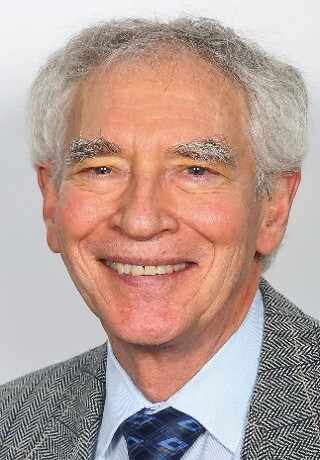 Alfred Allan (Australia)
Emeritus Professor Alfred Allan is a lawyer-psychologist specialising in mental health law, professional ethics and psychology in law. The Psychologists Board of Australia (Board) endorsed him as both a clinical and forensic psychologist and was a member of the inaugural Board from 2009 until 2018. He was a member of the Board of Directors of the International Association for Applied Psychology and is the former chair of the Association’s Standing Committee on Ethics. He was previously chair of the Australian Psychological Society’s (APS) Ethics Committee and the committees that reviewed the APS Code of Ethics and was a member of the Board’s Code Expert Advisory Group. He works as a legal-ethical consultant, expert witness and researcher and research supervisor at Edith Cowan University (ECU) and the University of Western Australia. He is a member of the Perth Emotion and Psychopathology Lab and affiliate member of Mental Health Research Group of ECU’s Centre for Precision Health.

Charu Kriti
Charu Kriti is an Assistant Professor of Psychology at the Department of Psychology & Behavioural Sciences, MILHS, Manipal Academy of Higher Education, Bengaluru, and a PhD scholar at CHRIST (Deemed-to-be University), India. Trained in both psychology (Banaras Hindu University) and law (University of Delhi), her work sits at the intersection of forensic psychology, criminology, and the psychology of gender
Her doctoral research examines how gender-role attitudes shape social decision-making and bias in the perception of female offenders within the Indian criminal justice system. With over a decade of experience teaching forensic and criminal psychology, cyber forensics, psychology & law, and research methodology across three Indian universities, she currently curates the Forensic Psychology specialisation for the MSc Applied Psychology programme at MAHE Bengaluru.
Her research has been presented internationally, including at ICAP 2026 (Florence) and Oxford, and her published work explores the intersection of perceptual bias and gender- from psychological wellbeing to women's empowerment in India- a thread her doctoral work now extends into female criminality. She is a Life Member of the Indian Society of Criminology and a member of the Indian Society of Forensic Science.
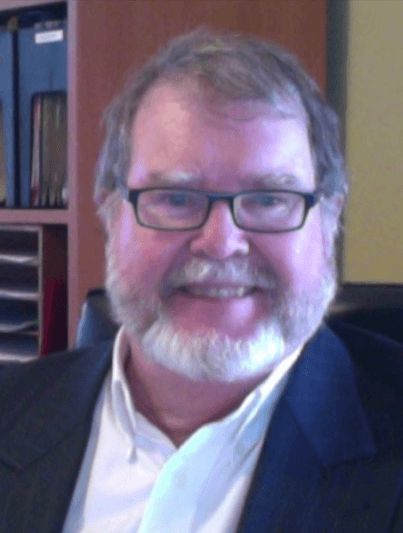
Jack White
Jack White is not the rock musician, but a forensic psychologist who is based in Adelaide, South Australia where he works in private practice. After graduating from the University of Adelaide in 1985 where he completed his Ph.D., he has spent most of his professional life writing psychological reports for the Courts. He has also authored two books on “Writing Reports for Court” published by Australian Academic press and has taught Forensic Psychology to Masters students at University of South Australia and the University of Canberra.
Dr White’s research interests have focussed on psychological assessment (especially the use of the Personality Assessment Inventory), intelligence and the law, parenting assessments and the effects of petrol sniffing among tribal Aboriginals in Australia.
Dr White has been a long-term member of the Australian Psychological Society’s College of Forensic psychologists, where he was the National Chair of the College between 1996 and 2000, and had been a member of the South Australian CFP Executive committee for 32 years. Outside of psychology he plays golf, enjoys watching cricket and Australian Rules football and is passionate about South Australian wine.
 Harleen Kaur
 is a Human Rights Fellow at the Carr-Ryan Center for Human Rights, Kennedy School, Harvard. She is working as an Assistant Professor at O.P. Jindal Global University, India. She was also a Visiting Fellow at the Herbert Simon Research Institute, Tilburg University, The Netherlands. Her scholarship engages identity formation, health, and social justice, with a sustained focus on vulnerable communities in South Asia and beyond. She authored Psychological Research Among Transgender Individuals: An Indian Case Study. Recognized as an "Emerging Psychologist" by the International Union of Psychological Sciences (IUPyS) and an ARTS Fellow by IAAP, Harleen has served as an invited expert for transgender care. She co-chaired Psychology Day at the United Nations by PCUN and currently contributes to multi-country research initiatives.
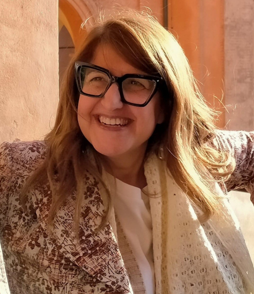 Claudia Chiarolanza
 is an Associate Professor of Dynamic Psychology at Sapienza University of Rome. Her research focuses on affective and relational processes in couples and families, including family conflict, dyadic coping, parental mentalization, separation and divorce, and the evaluation of family-mediation interventions.
Bringing together research, teaching, and professional practice, she is particularly interested in conflict management and in restorative and transformative approaches to justice. Her work explores how conflict can become an opportunity to repair harm, strengthen relationships, address underlying social conditions, and promote meaningful personal and collective change.
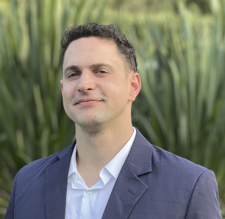 William Weber Cecconello
 is Professor of Psychology at Atitus Educação, Collaborating Professor in the Graduate Program in Law, and Coordinator of the Laboratory for Teaching and Research in Cognition and Justice (CogJus), Brazil. His work focuses on eyewitness psychology, investigative interviewing, memory and false memories, eyewitness identification, rapport, and cognitive biases in criminal investigations. He provides training, consultancy, and research support to justice and law enforcement agencies, promoting evidence based interviewing practices and the prevention of miscarriages of justice. William is a Regional Champion of the International Investigative Interviewing Research Group (iIIRG), Associate Editor of the International Journal of Police Science & Management, and an Associate Expert Member of the Convention against Torture Initiative (CTI).
 Anna Sagana
 is an Assistant Professor in the Forensic Psychology Section at Maastricht University, the Netherlands, and the Director of the two-year Master's in Forensic Psychology at Maastricht University. Her research aims to bring psychological science into the courtroom, helping legal decision-makers judge the reliability of human and more recently AI-generated evidence, from face recognition to expert testimony. She regularly trains and advises legal practitioners, including the Supreme Court of Estonia, the European Commission's anti-fraud office (OLAF) and defence counsel practising before international tribunals. Anna's involvement with IAAP goes back to her years as President of Division 15 (Students & Early Career Psychologists) from 2010 to 2014. Before that, she was Vice President of the European Federation of Psychology Students' Associations (EFPSA) and founding President of the Greek Psychology Students' Association.
 Jenna Wettstein
 received her master’s degree in Clinical Psychology from Teachers College, Columbia University, where she serves as Research Manager in the Child Protection Lab. Her work focuses on the intersection of psychology, law, and social systems, with particular interest in how research can inform policy and practice, strengthen reentry and support services, and address disparities affecting underserved communities. In the Child Protection Lab, her research examines legal decision-making within the criminal justice system and how legal policies and practices may function as risk or protective factors for psychosocial well-being. She is also co-founder of The Integration Project, a nonprofit organization created to address gaps in re-entry and transitional support for women and veterans returning to community life. Across her work, Jenna views lived experience as integral to understanding the impact of social systems and believes community perspectives should be centred in efforts to reform them. She also serves as an IAAP United Nations Representative, where she brings these values to her work on international initiatives.
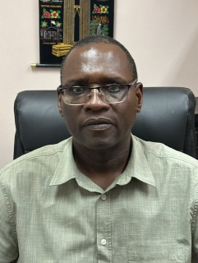 Dr Joab Mudzanapabwe
Dr Mudzanapabwe is a Clinical and Specialist Forensic Psychologist based in Windhoek, Namibia, registered with the Health Professions Council of Namibia. He maintains a private practice and serves as a part-time lecturer at the University of Namibia, where he teaches forensic psychology.
Joab is a former President of the Psychological Association of Namibia (2015 to 2017) and currently serves on the Education Committee of the Social Work and Psychology Council of Namibia. He has extensive experience in clinical and forensic psychology, working with children, adolescents, and adults.
He is regularly instructed by private and government legal practitioners to conduct psychological assessments, provide expert opinions in criminal and civil matters, and testify as an expert witness. His contributions have also included mental health policy development, legal and regulatory frameworks, vocational guidance services, psychometric test standardisation, and professional training in mental health and forensic psychology.
Quick Links
Join IAAP!
Not yet a member of IAAP? Join our community and unlock exclusive benefits, stay on top of the latest research, and connect with professionals globally. Head to our member benefits page for more details!
Announcements
